
Information & News
Air-Cooled vs. Liquid-Cooled Power Resistors: Maximising Space in Australian Mining and Rail Enclosures
by JN ·
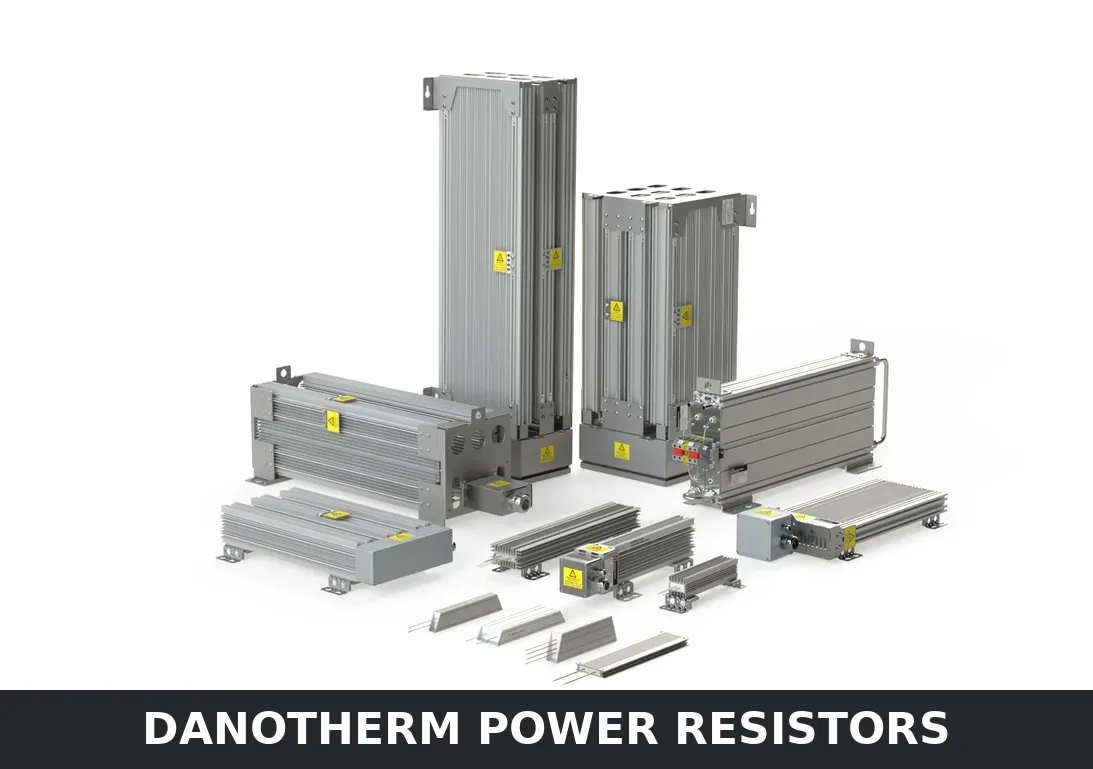
Australia’s industrial landscape is pushing heavy equipment to its physical limits. As mining operations expand, rail networks modernise, and Battery Energy Storage Systems (BESS) become central to the grid, engineers face a compounding challenge: how to dissipate massive amounts of energy without footprint explosion.
Traditional air-cooled grid or wirewound resistors have long been the default choice. However, when paired with Australia’s intense ambient summer temperatures and high-dust environments, the physical footprint required to safely ventilate these systems can quickly crowd out valuable enclosure space.
Here is why forward-thinking electrical engineers are shifting from bulky, imported air-cooled grid resistor banks to modern liquid-cooled solutions—and how it changes the game for high-power applications.
The Real Cost of Space: The Air-Cooled Footprint
Air-cooled power resistors rely entirely on surface area and high airflow to shed heat. While structurally simple, they bring distinct hidden penalties when deployed in Australian conditions:
- De-rating for Ambient Heat: A resistor rated for a mild European climate must be significantly de-rated when installed in the Pilbara or outback Queensland, where enclosure temperatures can regularly soar past 50°C. To compensate, engineers are forced to specify physically larger resistor banks.
- The Clearance Envelope: Air-cooled units require extensive clearance zones to allow natural or forced convection. This "dead space" cannot contain sensitive electronics, effectively doubling or tripling the actual footprint inside a switchroom or containerised BESS.
- Environmental Vulnerability: Open-air grids invite dust, salt spray, and mining particulates. If you seal them inside an IP-rated enclosure to protect them, you then require massive, failure-prone air conditioning units just to keep the internal air moving.
The Liquid-Cooled Solution: Packing Megawatts into Millimetres
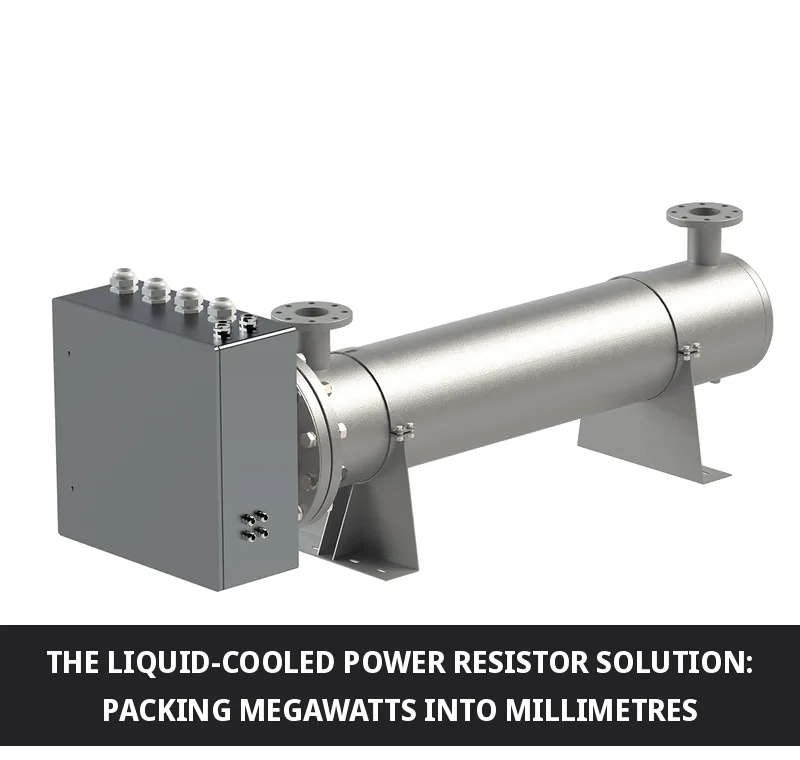
Liquid-cooled resistors disrupt this cycle by decoupling energy dissipation from ambient air temperature. By routing a liquid coolant (typically a water-glycol mix) directly through the resistor housing, heat is transferred away from the active elements up to 4 times more efficiently than air.
At Backer Cynebar Ohmic, our integration of premium Danotherm liquid-cooled resistors allows Australian operations to achieve unprecedented power densities across three distinct architectural ranges:
FOOTPRINT & EFFICIENCY COMPARISON
| Traditional Air-Cooled Grid | Modern Liquid-Cooled Element |
|---|---|
| ❌ Requires massive air flow | Coolant absorbs heat directly |
| ❌ Large clearance envelopes | ⚡ Compact, stackable design |
| ❌ Vulnerable to mining dust | 🔒 Fully sealed IP65/66 units |
1. The Alpha Series (CBW): Ultra-Compact Thermal Braking
The Danotherm Alpha Series (CBW) combines the immense power-to-space advantage of water cooling with the high pulse-load survival traits of an aluminium housing.
- The Performance: These insulated units use wirewound spirals embedded in protective silicon oxide or aluminium oxide filling. This acts as a thermal capacitor, soaking up sudden energy spikes up to 60 times their nominal rating.
- The Footprint Edge: Because they can be stacked directly against each other without air gaps, they easily slide into hyper-compact control panels and motor drives.
2. The WHBS Series: Heavy Industrial Pulse Protection
For medium-to-high capacity duties, the Danotherm WHBS Series scales up resilience.
- The Performance: Spanning nominal power ratings from 6 kW to 200 kW, the WHBS series handles operational voltages up to 1000 VAC / 1400 VDC. It features steel tube resistive elements completely welded inside a rugged steel tank.
- The Footprint Edge: Capable of handling up to 4 times its nominal power during rapid 5-second pulse cycles, it allows heavy-duty mining machinery and transport lines to safely absorb massive kinetic dumps without needing a physical bank the size of a shipping container.
3. The WHDN Series: Maximum Megawatt Dissipation
When projects cross over into massive utility or heavy-duty marine scale, the Danotherm WHDN Series becomes essential.
- The Performance: Capable of managing an immense power spectrum from 40 kW up to 1,450 kW, these high-voltage systems (up to 4700 VAC / 6600 VDC) are fully enclosed in thick DN100 to DN300 welded steel tanks.
- The Footprint Edge: Built standard with IP65/IP66 ingress protection and integrated air-bubble/thermal tracking sensors, the WHDN series eliminates external heat-sink radiation entirely. This means you can position a megawatt-tier energy filter or brake directly adjacent to sensitive digital hardware, keeping enclosure ambient temperatures perfectly neutral.