
Information & News
Stainless Steel 321 vs 316 vs Incoloy 800 vs Incoloy 825: Choosing the Right Heating Element Material
by JN ·
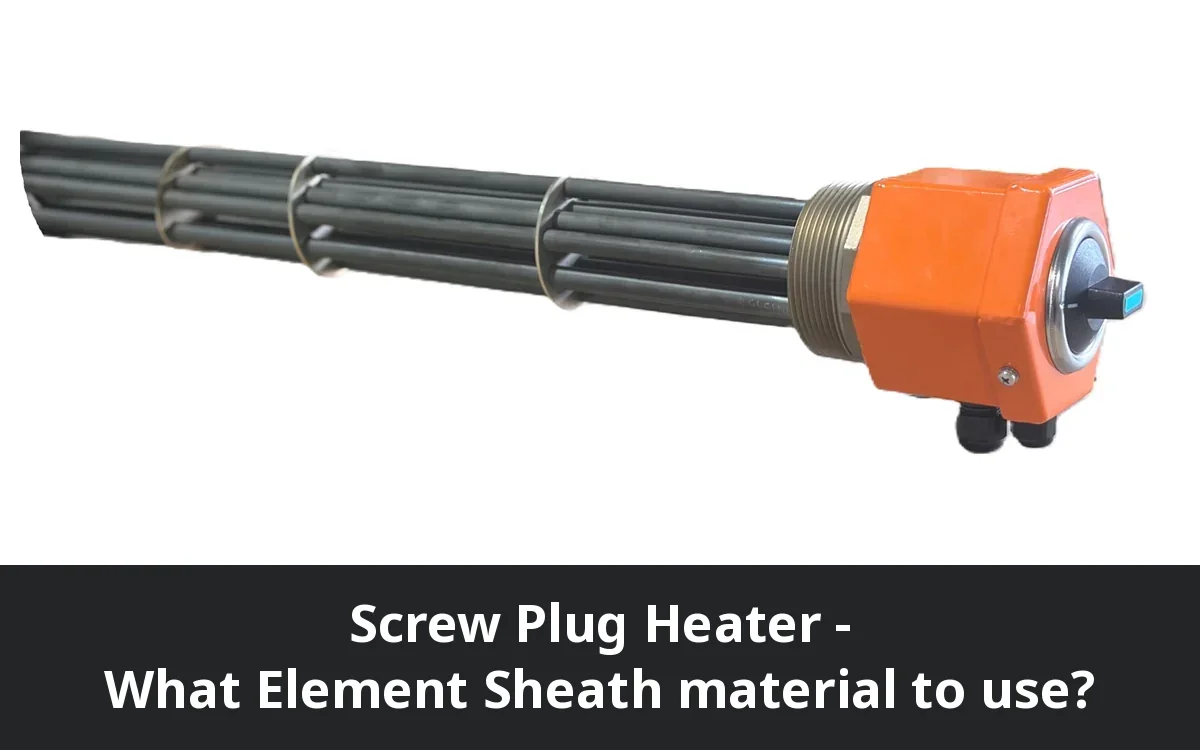
Choosing a heating element is not just a question of power and dimensions. The sheath—the outer material in contact with the process—must suit the medium, temperature and operating conditions. A replacement that fits mechanically can still be unsuitable for the application.
This guide compares stainless steel 321, stainless steel 316 and Incoloy 800, with titanium and Incoloy 825 as additional options for discussion. These are selection starting points, not universal compatibility guarantees.
Material Selection at a Glance
| Material | Best Use |
|---|---|
| SS321 | General industrial |
| SS316 | Corrosive environments |
| Incoloy 800 | High temperature |
| Titanium | Chemical process |
| Incoloy 825 | Corrosive chemical and water-heating applications |
The table provides broad material-selection guidance. No material is suitable for every fluid, chemical or temperature. In particular, “corrosive environments” does not mean resistance to all corrosive media or all acids. The exact substance, concentration and operating conditions must be checked before selecting a heater.
Stainless Steel 321: General Industrial Applications
SS321 is a starting point for general industrial heating where the process is compatible with the material. Confirm the fluid composition and operating conditions rather than selecting it solely because the equipment is described as industrial.
For a water-heating or manufacturing application, provide the water quality or process-fluid details, target temperature and cleaning requirements. These details help establish whether SS321 is appropriate or another sheath should be considered.
Stainless Steel 316: Corrosion-Focused Selection
SS316 is an option to consider for corrosive environments. That makes corrosion compatibility a key part of the selection discussion, not a reason to assume that SS316 is automatically suitable for any chemical process.
For water treatment or food-processing equipment, consider both the normal process medium and any cleaning chemicals. Concentration, operating temperature and deposits on the element all matter when reviewing the complete heater design.
Incoloy 800: High-Temperature Selection
Incoloy 800 is an option to consider for high-temperature applications. Selecting a high-temperature sheath still requires a review of the complete system, including the surrounding medium, heat transfer, controls and operating duty.
The element surface temperature is not necessarily the same as the measured air or fluid temperature. For an industrial oven or process-air application, discuss airflow, required temperature, thermal cycling and the available space before choosing the element and its material.
When to Discuss Titanium or Incoloy 825
Titanium is an option for chemical-process applications and is listed among our existing heater material options. The actual chemical and operating conditions must be assessed before it is selected.
Incoloy 825 is an option to discuss for corrosive chemical and water-heating applications. Suitability depends on the exact medium, concentration and operating conditions; it is not a guarantee of resistance to every chemical or acid. Confirm compatibility and available heater construction with our team.
Application Questions for Australian Industry
The following are selection scenarios, not claims about completed customer projects. Each industry can involve several different process media and heater designs.
Food Processing
For process vessels and cleaning-in-place systems, identify the product being heated, cleaning agents, washdown conditions and required temperature. Material selection should consider the cleaning cycle as well as normal production.
Mining
For process tanks and fluid-heating equipment, describe the fluid or slurry, solids, deposits and duty cycle. A material name alone cannot establish suitability for a harsh operating environment.
Water Treatment
Provide water chemistry, any treatment chemicals, concentration and the likelihood of scale or fouling. Include minimum liquid level and operating conditions so the heater design and protective controls can be considered together.
Chemical Plants
Identify the exact chemical or mixture and its concentration, rather than describing it only as a chemical solution. Supply safety data and compatibility requirements, along with temperature, pressure and flow conditions where relevant.
Material Is Only One Part of Heater Design
The right sheath cannot compensate for inappropriate watt density, poor heat transfer or inadequate protection. Discuss the heater material alongside element loading, immersion or flow conditions, temperature sensing and high-limit protection. For replacements, photographs and drawings of the existing installation are useful.
What to Send for Technical Selection
- Process medium, chemical composition and concentration, with safety data where applicable
- Normal and maximum process temperatures, including cleaning cycles
- Required heat-up time, holding duty and power requirement if known
- Supply voltage and phase
- Flow conditions or liquid level, operating pressure and installation orientation
- Mounting dimensions, thread or flange details, drawings and photographs
- Existing sheath material, failure history, deposits or corrosion observations
- Control, protection and site-specific requirements
Talk to Backer Cynebar Ohmic
Our existing range includes tubular heating elements and immersion heaters, with material options selected to suit the application. Share your operating details with our team before specifying SS321, SS316, Incoloy 800, Incoloy 825 or a specialist alternative.
Explore our Tubular Heating Elements and Immersion Heaters, or contact Backer Cynebar Ohmic for help with heater and sheath selection.